

ADHD home organisation: a Sydney professional organiser's guide
If you've ever had a burst of energy, cleaned the entire house in an afternoon, and watched it slide back into chaos within a fortnight, you're not doing anything wrong. Most organising advice is written for a kind of brain that doesn't run on bursts and crashes. For ADHD households, the goal isn't more willpower or a better burst — it's a home designed to stay functional even when the energy isn't there.
Here's what tends to actually work.
See it to remember it
Closed drawers and opaque bins are where things go to be forgotten — and then quietly re-bought. Open shelving, clear containers and honest labels keep belongings visible, which does a lot of the remembering for you.
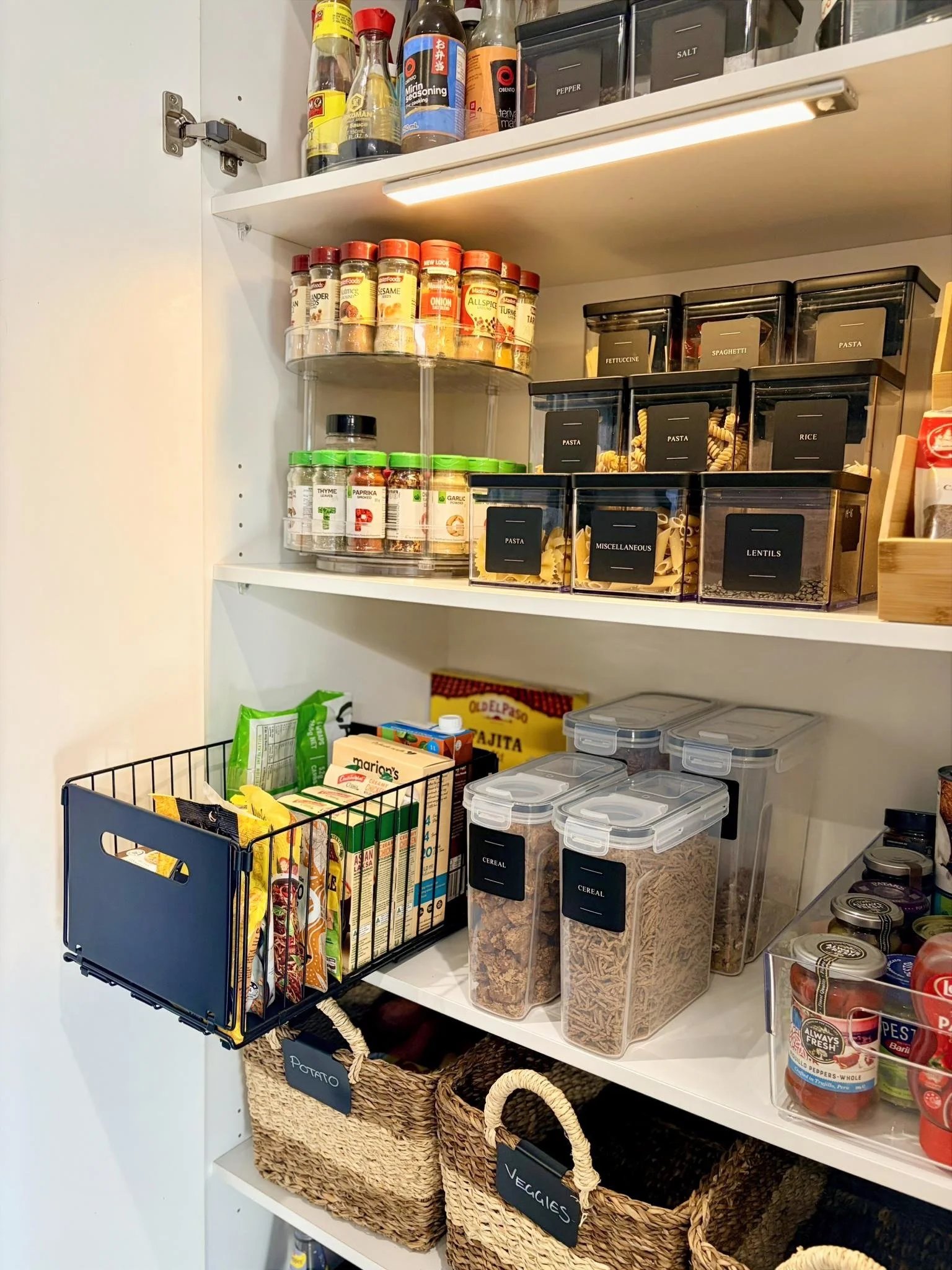
Reduce the steps between "have it" and "away"
The more steps a task takes, the less likely it is to happen on a low-energy day. A basket with no lid beats a drawer that needs opening, sorting and closing. A hook beats a hanger. Think about how the item is actually used in the moment, and design the system around that motion rather than around what looks tidiest in a magazine.
- Open baskets over lidded boxes for anything used daily
- Hooks over hangers for bags, jackets and school uniforms
- Zones by activity, not category — a "launch pad" near the door for keys, bags and shoes works better than keys living in a drawer across the house
- Visual, colour or icon labels, not just text, to remove the "where does this go" decision entirely

Design for the crash, not just the burst
Energy and motivation for ADHD households tend to move in waves. A system that only works when maintained daily will collapse the first busy or low week — and then the collapse itself becomes a source of shame, which makes starting again even harder. Build in forgiveness instead.
A single "reset basket" or clear surface where things can be dumped on a hard day, then sorted properly later, does more for long-term tidiness than any elaborate system. It gives the mess somewhere contained to go, rather than spreading room to room.
For sensory needs too
Where autism sits alongside ADHD in a household, storage benefits from calm, predictable visuals: fewer competing colours and patterns, consistent "homes" for items, and attention to the sensory experience of the storage itself — a soft-close drawer over one that slams, smooth containers over ones with rough or sticky textures.

Small and frequent, over big and rare
Where possible, little-and-often maintenance beats occasional deep overhauls — ten minutes most days is more sustainable than one exhausting weekend a month. That said, most ADHD households need a proper reset first, simply to get to a starting point that's realistic to maintain. That's usually where professional home organisation support makes the biggest difference: someone else does the heavy lifting of the first transformation, and leaves you with systems designed to survive real life.
Ready to get started?
Book a free 15-minute consultation and let's talk about your space, no obligation.
Book a free 15-min consult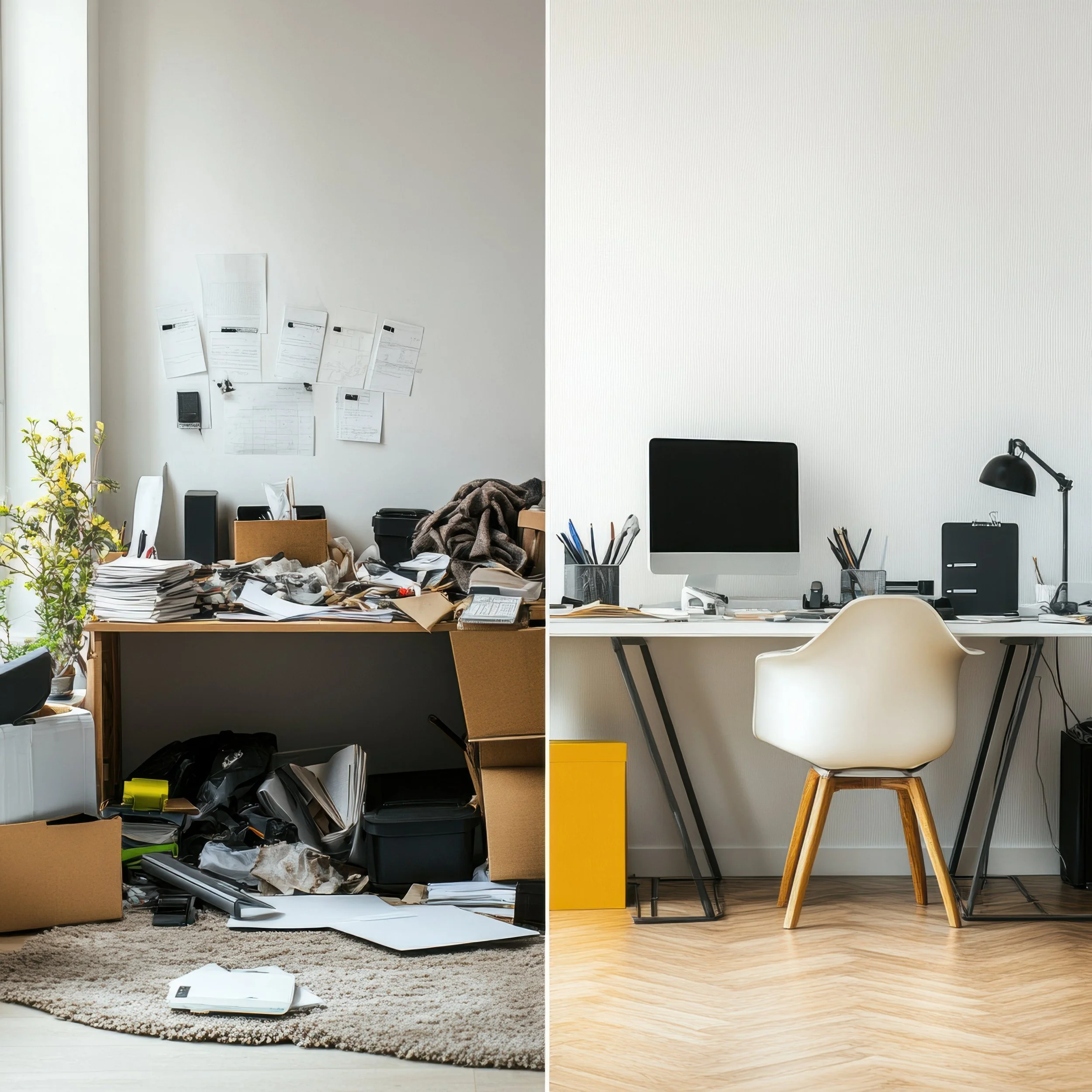
The Mental Benefits of Home Organisation: More Than Just a Tidy Space!
The act of decluttering and organising your space can have a profound impact on your mental and emotional wellbeing.
When most people think about organising their home, they picture colour-coded labels, matching storage tubs, or finally finding their keys without a 10-minute search. But there’s much more to it than that. The act of decluttering and organising your space can have a profound impact on your mental and emotional wellbeing.
As a professional home organiser, I’ve seen firsthand how transforming a space can transform a person’s mindset, energy, and even their overall quality of life. Here are some of the key mental benefits of home organisation—and why tidying your space could be one of the best forms of self-care.
1. Reduced Stress and Anxiety
Clutter can cause your brain to go into overdrive. Visual mess constantly signals to the brain that work isn’t done, which can increase cortisol levels (your stress hormone). An organised, streamlined space promotes calm, clarity, and peace of mind, helping to reduce anxiety and create a more relaxing home environment.
2. Improved Focus and Productivity
Have you ever noticed how hard it is to concentrate in a messy space? Clutter competes for your attention, leading to distractions and mental fatigue. With everything in its place, you’re able to focus more effectively and get through your day with less frustration and more ease.
3. Enhanced Mood and Emotional Wellbeing
Living in a chaotic environment can take a toll on your emotional state. On the flip side, organising your space—even one small corner—can provide a real sense of achievement. Many of my clients report feeling lighter, more positive, and more hopeful after just a single session. There’s a powerful emotional lift that comes from creating order in your surroundings.
4. Better Sleep
A clutter-free bedroom creates the ideal environment for rest. When your room is tidy, your brain isn’t subconsciously processing the “unfinished business” all around you. This promotes deeper, more restful sleep, which has ripple effects on every aspect of your mental health.
5. A Sense of Control
When life feels overwhelming, taking control of your physical environment can be incredibly grounding. Organising your home—on your own terms—gives you a tangible sense of control, which can be empowering, especially during times of change, grief, or transition.
6. Reduced Decision Fatigue
Every item out of place is a decision waiting to be made. “Where should this go?” “Do I need this?” “Where did I last see it?” By creating systems and assigning homes to your belongings, you minimise the number of decisions you need to make throughout the day. This frees up mental energy for the things that really matter.
7. Encourages Healthy Habits and Routines
A well-organised home supports better routines. When your kitchen is clear, you’re more likely to cook. When your entryway is functional, you’re less likely to forget your keys or rush out stressed. Small systems create the foundation for big changes in your daily life.
8. Provides a Sense of Stability and Safety
For those who struggle with hoarding tendencies, trauma, or chronic disorganisation, a cluttered environment can feel chaotic or unsafe. By thoughtfully organising a space, we create stability, structure, and calm—a safe place to land, emotionally and physically.
Final Thoughts
Home organisation is not about perfection—it's about creating a space that supports your wellbeing. Whether you’re clearing out one drawer or tackling your entire home, the mental shift that follows is often more powerful than the physical change.
If you’re feeling stuck, overwhelmed, or unsure where to begin, know that help is available—and the benefits are truly worth it. Sometimes the smallest changes to our environment can spark the biggest shifts in our mindset and mental health.
"Clearing with Compassion: Supporting the Journey Beyond Clutter"
At Bright Spaces we understand that letting go of belongings isn’t always a simple task. For some, it’s tied to deep emotion, past experiences, and even survival instincts. That’s why we believe in approaching every client—and every space—with compassion, patience, and care.
Hoarding is often misunderstood, but there’s a growing movement to view it through a more empathetic and informed lens. Whether you’re supporting a loved one, navigating your own decluttering journey, or simply curious to learn more, here are a few articles and resources that shine a hopeful light on the subject.
1. Cultural Perspectives on Hoarding: Necessity or Disorder?
This thoughtful piece examines how hoarding is viewed differently across cultures, and how in many communities, saving items is rooted in survival and scarcity—not disorder. A reminder that empathy begins with understanding.
👉 Read the article:
https://www.ourmental.health/hoarding-disorder/words-of-insight-powerful-hoarding-disorder-quotes-that-inspire-understanding

Virtual reality therapy may help people with hoarding disorder declutter.
A recent pilot study conducted by researchers at Stanford Medicine suggests that virtual reality (VR) therapy may offer a promising solution by allowing individuals with hoarding disorder to practice decluttering in a simulated environment mirroring their own homes.
A recent pilot study conducted by researchers at Stanford Medicine suggests that virtual reality (VR) therapy may offer a promising solution by allowing individuals with hoarding disorder to practice decluttering in a simulated environment mirroring their own homes.
👉 Read the article
https://knowridge.com/2023/10/virtual-reality-therapy-may-help-people-with-hoarding-disorder-declutter/?utm_source=chatgpt.com